Total: $0.00
Baby can't wait?
(exclusive offer)

If you're a formula-feeding parent who just saw a recall headline and immediately picked up the nearest tin to check the lot number, you're in the right place. Baby formula recalls in 2026 have generated more parental anxiety than any year since the 2022 Abbott shortage. Some of that anxiety is justified. Some of it is driven by headlines that don't clearly distinguish between US recalls and international events that never touched domestic shelves.
We check verified status for every major brand, explain what actually happened with the two significant 2025–2026 recall events, and tell you exactly how to check baby formula recall status going forward — without relying on secondhand social media posts.
Every brand entry below was verified against the FDA recall database (fda.gov) on May 11, 2026. Recall statuses change. If you are reading this more than 30 days after that date, cross-check directly at fda.gov before acting on any information here.
Which baby formulas have been recalled in the US? Only one, as of this writing:
| Brand | US Recall Status | Last Notable Event |
|---|---|---|
| ByHeart | ⛔ Active Recall | Dec 2025 (Feb 2026 update) — infant botulism, ALL products |
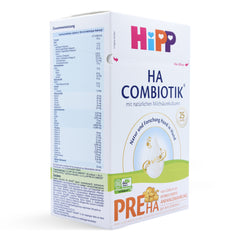
| HiPP | ✓ No Recall | No recent FDA recall events |
| Holle | ✓ No Recall | No recent FDA recall events |
| Kendamil | ✓ No US Recall | Canada packaging recall — resolved early 2026 |
| Bobbie | ✓ No Recall | No recent FDA recall events |
| Enfamil | ✓ No Recall | Historical labeling recalls only |
| Similac / Abbott | ✓ No Recall | 2022–2023 Cronobacter event resolved |
| Gerber | ✓ No Recall | Limited historical packaging recalls |
| Aptamil | ✓ No US Recall | UK/Ireland recall 2026 — did not affect US supply |
| Nestlé / SMA / BEBA / NAN | ✓ No US Recall | Global cereulide crisis — did not affect US supply |
The bottom line for parents using HiPP, Holle, Kendamil, Bobbie, Enfamil, Similac, or Gerber: there are no active US recalls on any of these brands as of this writing. Continue feeding normally.
If you are using ByHeart: stop immediately. Details below.
The ByHeart formula recall is the only active infant formula recall the FDA has opened in the US as of May 2026. This is not a precautionary measure or a packaging error. It is a serious, clinically significant recall you must act on if any ByHeart product is in your home.
On December 10, 2025, the FDA issued a full mandatory recall of ALL ByHeart Whole Nutrition Infant Formula — every lot number, package size, and retail location. The cause was a multistate outbreak of infant botulism traced to the formula. Two FDA product samples tested positive for Clostridium botulinum Type A toxin, with contamination traced back to one lot of organic whole milk powder used as an ingredient.
The CDC monitored the outbreak through its resolution. As of the CDC's final update on February 26, 2026, there were 28 confirmed cases and 20 probable cases across 19 states. The outbreak has been declared over, but the ByHeart formula recall remains in full force — the product is not safe for use.
The FDA issued warning letters to Walmart, Target, Kroger, Albertsons, and independent retailers after confirming these retailers had not fully cleared ByHeart products from shelves. If you purchased ByHeart from any retailer, assume the specific lot could be affected.
If your baby has consumed ByHeart formula recently and shows any unusual symptoms — difficulty feeding, weakness, altered cry, constipation — seek medical attention without delay and specifically mention the ByHeart recall.
Monitor the FDA's official database at fda.gov for status updates. We also maintain a live recall tracker updated regularly — bookmark it.
The Nestlé formula recall 2026 generated enormous international headlines, and understandably so — it's the largest voluntary infant formula recall in Nestlé's history. For US parents, the critical clarification: Nestlé brands distributed in the US were not affected. US shelves — Similac, Enfamil, Gerber, Bobbie, Kendamil — were unaffected.
Here's what actually happened. In December 2025, Nestlé identified low levels of cereulide — a heat-stable toxin produced by Bacillus cereus — during routine testing at its Nunspeet factory in the Netherlands. The contamination was traced to ARA oil supplied by Cabio Biotech, a Chinese supplier. The recall cascaded through the European supply chain as other manufacturers (Danone, Lactalis, and others) sourced ARA from the same supplier and issued their own precautionary withdrawals.
The affected international brands include Alfamino, BEBA OptiPro 1, BEBA Comfort, NAN Pro 1, NAN HA 1, Guigoz OptiPro Relais, Lactogen Harmony 1, SMA infant formula (UK/Ireland), and others across 50+ countries and 800+ products. On February 2, 2026, EFSA issued a safety threshold for cereulide in infant formula for the first time — a regulatory milestone triggered by this event.
Understanding the categories behind baby formula recalls by brand makes it easier to assess risk accurately when headlines hit.

Here's a practical how-to that takes about five minutes:
The baby formula recall by brand pattern from 2022 through 2026 has a consistent thread: risk concentrates around large single-facility manufacturing operations with complex supply chains. A few practical habits that genuinely reduce your exposure:
No. All ByHeart Whole Nutrition Infant Formula products remain under active FDA recall as of May 11, 2026. Stop use immediately, discard, and contact your pediatrician.
No. There is no HiPP formula recall active in the US as of May 11, 2026. HiPP undergoes frequent EU manufacturing inspections, and no recent FDA recalls have been associated with any HiPP products.
No. There is no Holle formula recall in the US. Holle's Demeter-certified supply chain has maintained a clean recall record.
Not in the US. Kendamil recall 2026 refers to a packaging error recall in Canada that was resolved promptly and had no impact in the US. Kendamil's US supply was unaffected.
No. There is no Bobbie formula recall in the US as of this writing. Bobbie has maintained a clean FDA record.
No. The Nestlé formula recall of 2026 was an international event that affected 50+ countries via European manufacturing facilities. US-distributed Nestlé brands, Similac, Enfamil, and domestic alternatives were unaffected.
As of May 11, 2026: only ByHeart Whole Nutrition Infant Formula. All other major brands — including HiPP, Holle, Kendamil, Bobbie, Enfamil, Similac, and Gerber — have no active recalls in the US.
Baby formula recalls in 2026 have generated significant anxiety — some of it proportionate, most of it not. The verified reality: one active US recall (ByHeart), one major international event that did not reach US shelves (Nestlé cereulide crisis), and a full roster of other major brands with clean current status.
Organic Life Start is committed to providing accurate, reliable, and trustworthy information to parents and caregivers. We carefully choose credible sources and follow a meticulous fact-checking process to uphold the highest standards in infant nutrition and parenting advice. To learn more about our dedication to accuracy, please explore our editorial guidelines.
Link To Sources

By: Isa
Happy mom of 1. Built her career in the medical equipment industry, and later on converted her passion to serving babies. Organic Life Start customer service since 2022.