Total: $0.00
Baby can't wait?
(exclusive offer)

38 hours of research 4 minute read
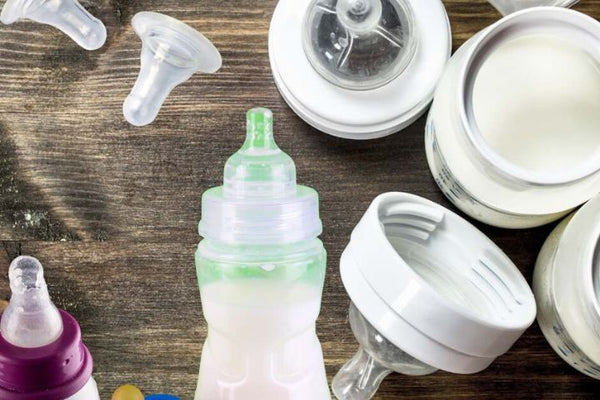
Feeding your little one involves more than just selecting the right formula or breast milk; the size of their bottle nipple is a crucial factor. In this comprehensive guide, we'll combine insights from experts Nicole Harris and Mahizul Islam to provide an in-depth understanding of baby bottle nipple sizes. Additionally, we'll touch upon popular brands like Dr. Brown, Avent, Tommee Tippee, and more, exploring their unique offerings.
Select your baby's age and bottle brand to find the exact nipple level — with signs it's time to change and a cross-brand comparison.
Age ranges are manufacturer guidelines — always watch your baby's feeding cues. Replace nipples every 2 months or if damaged. Consult your pediatrician for personalized advice.
Choosing the right nipple size for your baby's bottle is paramount. It directly impacts the flow rate of milk or formula, influencing your baby’s feeding experience and overall comfort.
Different babies have distinct sucking abilities. Using an inappropriate nipple size can lead to discomfort during feeding. A small nipple can make feeding difficult, while a large one can cause choking.
The flow rate from the nipple significantly impacts how quickly your baby consumes their feed. Newborns and younger babies usually require a slower flow to prevent overfeeding and digestion issues.
The right nipple size aids in the development of your baby’s oral skills. Gradually transitioning to a faster flow as your baby grows supports the coordination of sucking, swallowing, and breathing.
To assist parents in selecting the appropriate nipple size, baby bottle manufacturers often provide charts indicating the recommended age range for each size. This ensures your baby uses the right nipple size as they grow.
Here is a baby bottle nipple size chart:
| Nipple Size | Age Range | Flow Rate |
|---|---|---|
| Slow Flow | 0-3 months | Ideal for newborns |
| Medium Flow | 3-6 months | Suitable for most babies |
| Fast Flow | 6+ months | Suitable for older babies |
Newborns have unique feeding needs, and using an inappropriate nipple size can cause difficulties. Newborn nipples are designed for the first few months, offering:
Understanding the differences between Size 0 and Size 1 nipples is crucial for a comfortable feeding experience.
Gradual introduction is crucial, observing your baby's response and adjusting based on comfort.
Designed for babies aged 3 to 6 months, Size 2 Nipples offers:
Observe feeding patterns and consult with a pediatrician if unsure.
For babies around 6 months and up, Size 3 nipples offer:
Adapt to individual needs, consulting a pediatrician for guidance.
Consider factors like age, flow rate, baby’s feeding style, and bottle type when choosing nipple size. Avoid common pitfalls such as using the wrong size, ignoring baby’s cues, and not checking for wear and tear. Regularly monitor and adjust nipple size based on your baby’s progress.
Soft nipples play a crucial role in ensuring a comfortable and natural feeding experience for your baby. These specialized bottle nipple are designed with the delicate nature of an infant's mouth in mind, providing several benefits that contribute to both the baby's well-being and the ease of feeding.
When selecting baby bottles, consider opting for those equipped with soft nipples, as they provide an excellent combination of comfort, functionality, and ease of use. Always ensure that the nipple is intact, free from damage, and suitable for your baby's age and feeding preferences. Soft nipples are a valuable component in creating a positive and nurturing feeding experience for your little one.
Dr. Brown's bottles come with different nipple levels to accommodate various flow rates. Level 1 is suitable for newborns, while higher levels provide faster flow for older babies.
Avent offers different nipple sizes, including Newborn, Slow, Medium, and Fast Flow. These cater to various age groups and feeding preferences.
Tommee Tippee provides nipples with different flow rates, starting from Slow Flow Nipple for newborns to Medium and Fast Flow for older babies.
Below is a simple chart comparing Philips Avent and Tommee Tippee nipple sizes:
| Nipple Size | Philips Avent | Tommee Tippee |
|---|---|---|
| Slow Flow | Newborns - Mimics breastfeeding | Newborns - Slow flow for a natural pace |
| Medium Flow | 3-6 months - Suitable for most babies | 3-6 months - A balance between flow and comfort |
| Fast Flow | 6+ months - Suitable for older babies | 6+ months - Faster flow for efficient feeding |
Note: Always refer to the specific charts provided by the manufacturers for the most accurate and up-to-date information. Individual baby needs may vary, and it's essential to monitor your baby's cues for any necessary adjustments.
Glass baby bottles are an eco-friendly option. Brands like Evenflo and NUK offer glass bottles with various nipple options.
Evenflo bottles, including their Balance Bottles, come with different nipple sizes suitable for newborns to older infants.
NUK bottles provide a range of nipples, ensuring a comfortable feeding experience for babies of different ages.
Evenflo's Balance Bottles are designed with a unique nipple shape to promote a natural latch and comfortable feeding experience.
Choosing the right nipple size is crucial for your baby's comfort, development, and overall feeding experience. Tailor your choice based on your baby's age, developmental stage, and individual preferences. Regularly monitor your baby's cues and adjust the nipple size as needed. For personalized guidance, consult with a pediatrician or lactation consultant.
Tailoring the nipple size to your baby’s needs ensures a positive feeding experience, promoting both their growth and well-being.
Note: Always follow the guidelines provided by the respective bottle and nipple manufacturers for the best results. The information provided here is for general guidance, and individual baby needs may vary.
The table below shows the standard nipple flow levels used by most major brands, along with the recommended age range. Keep in mind that every baby feeds differently — use age as a starting point and watch your baby's cues to find the right fit.
| Nipple Level | Flow Rate | Typical Age | Best For |
|---|---|---|---|
| Preemie / Level 0 | Extra Slow | Premature – 0 months | Premature babies; breastfed newborns supplementing with a bottle |
| Level 1 | Slow | 0 – 3 months | Newborns; combination-fed babies; mimics breastfeeding pace |
| Level 2 | Medium | 3 – 6 months | Growing babies with stronger sucking; babies taking longer than 30 min per feed on Level 1 |
| Level 3 | Fast | 6 – 9 months | Older babies who are efficient eaters; babies who tug or fuss on Level 2 |
| Level 4 | Extra Fast | 9+ months | Toddlers; very experienced bottle feeders |
| Variable / Y-Cut | Adjustable | 3+ months (or as directed) | Thickened formula (e.g., HiPP Anti-Reflux); cereal in bottles if recommended by a pediatrician |
Note: Age ranges are manufacturer guidelines, not strict rules. Always monitor your baby for signs it's time to change the nipple size.
Nipple sizes are not universal across brands — a "Level 2" from Tommee Tippee does not flow at the same rate as a "Level 2" from Dr. Brown's. The chart below compares Tommee Tippee nipple sizes with three other popular brands so you can see exactly how they differ.
| Flow / Age | Tommee Tippee | Dr. Brown's | Philips Avent | NUK |
|---|---|---|---|---|
| Preemie | — | Preemie Flow 0 mo+ |
First Flow (0) 0 mo |
— |
| Extra Slow | Level 0 0 mo+ |
Level T 0 mo+ |
— | — |
| Slow (0–3 mo) |
Level 1 0–3 mo |
Level 1 0–3 mo |
Flow 2 (Slow) 1 mo+ |
Size 1 (S) 0–6 mo |
| Medium (3–6 mo) |
Level 2 3 mo+ |
Level 2 3 mo+ |
Flow 3 (Medium) 3 mo+ |
Size 1 (M) 0–6 mo |
| Fast (6+ mo) |
Level 3 6 mo+ |
Level 3 6 mo+ |
Flow 4 (Fast) 6 mo+ |
Size 2 (M) 6–18 mo |
| Extra Fast (9+ mo) |
— | Level 4 9 mo+ |
Flow 5 (Extra Fast) 9 mo+ |
Size 2 (L) 6–18 mo |
| Variable / Thick | X = Vari Flow 0 mo+ Y = Thick Feed 6 mo+ |
Y-Cut 9 mo+ |
Variable (Y-cut) 3 mo+ |
Size 2 (L) for thicker feeds |
Key takeaway: Tommee Tippee nipple sizes use one uniform shape across all flow rates — you only change the size of the hole, not the nipple itself. Dr. Brown's and Avent vary both shape and flow. Always test the flow rate by turning the bottle upside down before feeding your baby.
| Move UP a Size If… | Move DOWN a Size If… |
|---|---|
| Feeds take longer than 30 minutes | Baby coughs, chokes, or gags during feeding |
| Baby falls asleep mid-feed repeatedly | Milk leaks from the corners of baby's mouth |
| Baby tugs, pulls, or bites the nipple | Baby gulps loudly and swallows air |
| Baby seems frustrated and fussy during feeds | Baby finishes the bottle in under 5 minutes |
| Baby sucks hard but gets little milk | Increased gas, spit-up, or colic symptoms |
Replace all nipples every 2 months, or immediately if you notice cracks, tears, discoloration, or a sticky texture.
Choosing the right nipple size is only half the equation — the formula you use affects flow, thickness, and your baby's comfort too. Explore our guides and top-selling formulas below.
Bottle nipple sizes (Level 0/Preemie, 1, 2, 3, 4) indicate the flow rate — how quickly milk passes through the nipple. Level 1 is the slowest (newborn), and flow increases with each level. Sizes are not strictly tied to age; they should match your baby's feeding ability.
Move up a nipple size when your baby shows signs of frustration during feeding: taking too long to finish (over 30 minutes), falling asleep mid-feed, sucking aggressively, or pulling on the nipple. If your baby chokes, gags, or leaks milk, the flow may be too fast — try a smaller size.
Newborns typically start with Level 1 (slow flow) nipples designed for ages 0–3 months. Premature babies may need a Preemie or Level 0 nipple, which has an even slower flow.
No. Nipple sizes vary between brands — a Level 2 from one brand may flow faster or slower than a Level 2 from another. Always test the flow rate before giving the bottle to your baby, regardless of the size label.
Yes. A nipple that flows too fast can cause babies to swallow air, leading to gas, spit-up, or colic. A nipple that flows too slow can cause frustration and air swallowing from sucking too hard. Match the nipple size to your baby's feeding pace for comfort.
Organic Life Start is committed to providing accurate, reliable, and trustworthy information to parents and caregivers. We carefully choose credible sources and follow a meticulous fact-checking process to uphold the highest standards in infant nutrition and parenting advice. To learn more about our dedication to accuracy, please explore our editorial guidelines.
Link To Sources

By: June
Proud mom of three boys (all formula-fed!) and a believer that raising kids takes a village. Organic Life Start customer service since 2022.





Everett -
As first-time parents, we are currently trying to figure out which bottle nipple size works best for a baby struggling with colic and gas issues. We noticed that sometimes our baby drinks too quickly, which can lead to more fussiness, spit-up, and trapped air after feeding. We are wondering if using a slower flow nipple would help make feeding more comfortable and reduce the amount of air swallowed during feeds. There are so many nipple sizes and bottle options available that it honestly feels overwhelming trying to choose the right one for our little one. We would really appreciate hearing recommendations from other parents about which nipple flow or bottle setup helped improve feeding for their colicky baby.
Danika P -
I’ve always just stuck to one nipple size once it seemed to work for my baby, but after reading this, I’m starting to see why adjusting bottle nipple sizes as they grow might actually be better. I never really paid attention to how flow speed can affect feeding comfort and swallowing. It makes me rethink some of the small struggles we’ve had during feeds. Definitely something I wish I understood earlier.
Rex -
What would you recommend to parents whose babies have reflux issues? I think we have tried several nipple sizes already, but so far we have not found the right fit. Slow flow frustrates him, medium flow gives him slight reflux issues, and fast flow makes him spit up constantly.