Total: $0.00
Baby can't wait?
(exclusive offer)

Some formula decisions are straightforward. Kendamil isn’t one of them - not because the brand is complicated, but because both versions are genuinely good, and the difference between them is subtler than most comparison guides let on.
Kendamil is a British brand that’s been making infant formula since 1962 and gained a serious following in the US after the 2022 shortage. It holds a rare distinction: it’s the only major European formula brand available at Target, and it’s the formula used in UK hospitals. That’s not marketing - it’s a meaningful signal about the level of trust the brand has earned among pediatric professionals.
But once you’ve decided on Kendamil, the next question arrives almost immediately. Kendamil Organic vs Classic - what’s actually different, and does it matter for your baby? This guide answers that honestly, without inflating or underselling the differences.
Before getting into the Kendamil Classic vs Organic comparison, it helps to understand what both versions share - because that shared foundation is substantial and what separates Kendamil from most of the competition.
Is Kendamil Organic the only version worth considering? Not at all - after all, the Classic version is based on the same core philosophy. Both use whole milk rather than skimmed milk. This is the most fundamental difference between Kendamil and the majority of infant formulas on the market, European or otherwise. Most formulas strip the milk down and add vegetable oils to replace the fat. Kendamil doesn’t, because it keeps the milk whole, which naturally preserves the milk fat globule membrane (MFGM) - a bioactive component linked to cognitive development that most formulas either lose during processing or have to add back artificially.
Both versions are also palm oil-free, which matters for parents whose babies have struggled with constipation or firm stools on other formulas. And both meet strict UK and EU nutritional standards - some of the most rigorous in the world.
Kendamil Organic formula reviews consistently highlight two things: taste acceptance and digestive comfort. Parents report that babies take to it easily, even those who’ve been fussy about other formulas. That mild, creamy flavor profile is a direct result of the whole milk base, and it shows up across Kendamil Organic formula reviews for both the organic and Classic lines. When you compare Kendamil vs Kendamil Organic, you’re not choosing between a premium and a budget option. You’re choosing between two premium options with different sourcing philosophies.
This is where the actual difference between Kendamil Organic and Regular becomes concrete. The nutritional outcome for your baby is similar, but how the ingredients are produced is not.
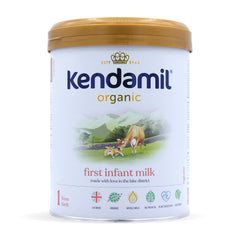
Milk source. Kendamil Organic uses milk from certified organic, pasture-raised cows. The farming practices are independently verified, with restrictions on synthetic pesticides, herbicides, and other agricultural chemicals throughout the food chain. Kendamil Classic uses milk from high-welfare farms - well-managed and carefully selected - but not certified organic.
Ingredient certification. In Kendamil Organic ingredients meet organic certification standards. In the Classic, ingredients are sourced to high-quality standards, but aren’t subject to the same certification requirements across the board.
Oils and carbohydrates. Both avoid palm oil. Kendamil Organic formula ingredients use certified organic oils and lactose. Classic uses high-quality conventional equivalents. The functional difference for digestion is minimal - the formulas behave similarly in the stomach.
DHA source. Both versions use algae-derived DHA rather than fish oil - one of the features that makes Kendamil suitable for vegetarian families and that removes the faint fishy smell associated with some other formulas.
The difference between Kendamil Organic and Regular is fundamentally about the supply chain, not the nutrient content. Your baby gets the same proteins, fats, carbohydrates, vitamins, and minerals either way. What changes are the agricultural and certification standards applied to the inputs?
This question deserves a straight answer: not significantly, in terms of the final nutritional profile. Both versions meet the same EU and UK nutritional standards. The essential nutrients - protein, fat, carbohydrates, DHA, iron, vitamins, minerals - are present in equivalent amounts and ratios regardless of which version you choose.
What organic certification actually provides is reduced pesticide exposure across the supply chain, stricter controls on farming practices, and greater transparency about how ingredients were produced. For some parents, that matters enormously - particularly those who already buy organic produce and dairy for the rest of the family. For others, it’s a lower priority than price or availability.
When parents compare Kendamil Regular vs Organic, they’re usually working through a values question more than a science question. Classic Kendamil is not a compromise on safety or nutritional completeness. Kendamil Organic vs Classic is a choice between two high-quality products with different ingredient sourcing philosophies - and the right answer depends on what you prioritize, not on which formula is objectively better for your baby’s development.
Kendamil Classic vs Organic looks different on paper than it does in daily life. When you’re feeding a baby multiple times a day, every day, practical factors carry real weight - and two stand out.
Price. Organic consistently runs 10-20% higher than Classic. Over several months of formula feeding, that gap compounds. For families on a tight budget, the Classic delivers the same core Kendamil philosophy - whole milk, no palm oil, algal DHA - at a more manageable cost. For families where organic sourcing is non-negotiable, the price difference is the cost of that priority.
Availability. Classic is more widely stocked - in Target stores, online, and increasingly in independent retailers. Organic is available at Target online and through specialist importers, but stock can be less consistent. Running out of formula mid-week with a hungry baby is a situation most parents want to avoid. Kendamil vs Kendamil Organic on availability: Classic is easier to keep consistently stocked without planning.
Both lines offer the same stage progression - Stage 1 (from birth), Stage 2 (six months onwards), and Stage 3 (toddler). So whichever you start with, you can continue through the full first year and beyond without switching brands.
Kendamil Goat vs Organic is a different kind of comparison because goat milk is a separate category, not just a variation on the cow’s milk range. It’s worth understanding when it becomes relevant.
Kendamil Goat uses goat milk as its base, which has a naturally higher proportion of A2 beta-casein protein and forms a softer curd in the stomach than standard cow’s milk. For babies who show signs of digestive discomfort on cow’s milk formula - gas, fussiness after feeds, irregular stools - the goat milk version is often worth trying before moving to something more specialized.
What it isn’t: a hypoallergenic formula. Goat milk still contains milk protein, and a baby with confirmed Cow’s Milk Protein Allergy will typically react to it. If a pediatrician has diagnosed CMPA, the solution is an extensively hydrolyzed formula, not a switch to goat milk.
For families whose primary concern is digestion rather than organic certification, the comparison between Kendamil Goat vs Organic is more relevant than Organic vs Classic. The goat milk range is available in both conventional and organic versions, depending on the market.

The honest framework for the Kendamil Organic vs Classic decision is this: both are excellent. Your choice should follow your priorities, not the assumption that one is inherently better:
Choose Organic if certified ingredient sourcing matters to you, you already apply organic standards to your family’s diet, your budget comfortably absorbs the higher price, and you can access it reliably through Target or an importer.
Choose Classic if you want the same core Kendamil formula at a lower cost, you prioritize ease of access and consistent availability, and you’re comfortable with high-quality conventional sourcing that doesn’t carry organic certification.
Kendamil Classic vs Organic ultimately comes down to one question: Is the certified organic supply chain worth the premium to you? Not whether organic is safer - it’s not. Not whether your baby will develop differently on one versus the other - they won’t. But whether that sourcing philosophy aligns with how your family approaches food more broadly.
The best formula is the one your baby tolerates well, that you can afford to buy consistently, and that you feel confident giving every day.

By: Erika
I'm a proud mom of two who believes in recognizing potential, even when others might not see it. Organic Life Start customer service since 2023.