Total: $0.00
Baby can't wait?
(exclusive offer)

There's a moment most parents hit somewhere around week three of formula research: you open two ingredient labels side by side — one American, one European — and realize you're looking at two completely different philosophies about what should go into a baby's first food.
The difference between European and American baby formula is regulatory, philosophical, and practical. European vs American baby formula comes down to five concrete things:
We cover all five, honestly, so you can actually make an informed decision rather than just being pushed toward whichever option someone's trying to sell you.
The fastest way to see the difference between European and American baby formula is to read the labels. Here's what you typically find:
| Ingredient Category | European Formula | American Formula |
|---|---|---|
| Carbohydrate source | Lactose-only common | Lactose + corn syrup solids common |
| Protein source | Intact cow's milk protein | Intact cow's milk protein |
| Fat blend | Vegetable oils + milk fats | Vegetable oils common |
| DHA | Mandatory since 2020 | Optional |
| ARA | Frequently included | Frequently included |
| Prebiotics & probiotics | Common in premium lines | Present in many brands |
| Sweeteners | More restricted | Wider allowed range |
| GMO ingredients | Restricted in organic lines | Allowed in some formulas |
| Common additives | Fewer stabilizers | More processing aids allowed |
The most significant split is in baby formula carbohydrate sources. European formulas typically use lactose as the sole carbohydrate — the same sugar found naturally in breast milk. Many US formulas use corn syrup solids or maltodextrin alongside or instead of lactose. These aren't poisonous, but they have a higher glycemic index than lactose and are genuinely more processed.
The second major difference is the inclusion of DHA in baby formula. Since 2020, DHA has been mandatory in all infant formulas sold in the EU. The FDA still treats it as optional — though most premium US brands now add it voluntarily. DHA is critical for brain and eye development, which is why this particular regulatory gap receives attention.
Both systems regulate formula safety seriously. The EU vs FDA formula regulations difference is about different priorities. EFSA leans toward clean composition and proximity to breast milk; the FDA leans toward deficiency prevention and centralized enforcement.
| Standard | EU (EFSA) | US (FDA) |
|---|---|---|
| DHA requirement | Mandatory since 2020 | Optional |
| Iron per 100 kcal | Max 1.3 mg | Up to 1.8 mg |
| Vitamin D minimum | 40 IU | 20 IU |
| Heavy metal limits | Stricter precautionary limits | FDA monitoring standards |
| Pesticide regulations | More restrictive | Broader allowances |
| Organic certification | 95% organic + GMO ban | Organic with exceptions |
| Age-stage requirements | Structured developmental stages | Often universal from birth |
| Recall enforcement | EU member-state oversight | Centralized FDA system |
The EU vs FDA formula regulations comparison reveals one place where the US has a genuine advantage: recall enforcement. The FDA operates a centralized recall system that covers every formula sold in the US. Buying from established importers with traceable supply chains — not random eBay listings — closes that gap significantly.
On organic baby formula standards: EU certification requires a minimum 95% organic ingredients plus a full GMO ban. US USDA Organic certification is meaningful, but permits more exceptions in practice. If organic purity is your priority, European certification sets a higher bar.
This is one of the most structurally interesting parts of the European vs American baby formula comparison, and it gets less attention than the ingredient debate. European formula stages explained simply: EU regulations require formulas to be specifically designed for different developmental windows. American formulas are mostly designed to work universally from birth through 12 months.
| Age Range | European System | American System |
|---|---|---|
| 0–6 months | Stage 1 — whey-dominant, lactose-only | Infant Formula (birth–12 months) |
| 6–12 months | Stage 2 — increased iron, adjusted protein | Same product continued |
| 10/12+ months | Stage 3 — fortified for solids transition | Toddler Formula 12+ |
| 12+ months | Stage 4 — supports diversified diet | Toddler Formula continued |
European formula stages explained in practical terms: the formula a newborn drinks has a different protein ratio and carbohydrate load than the one a seven-month-old drinks — because their gut, immune system, and developmental needs are genuinely different at those points. American nutritional standards for infant formula haven't been significantly revised in decades.

This is where the European vs American baby formula gap becomes most visible. Europe has built a well-developed specialty ecosystem for specific infant needs; the US market lags, particularly in organic specialty options.
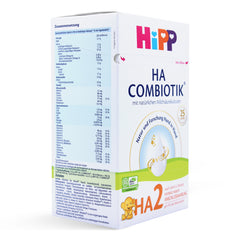
HiPP HA, Aptamil HA, and Holle offer partially hydrolyzed lines across multiple stages. US options — Similac Alimentum, Nutramigen — are clinically solid but conventionally produced, not organic.
EU-legal, EFSA-reviewed, and well-established. HiPP Goat, Holle Goat, and Kendamil Goat available through specialist importers. Every goat milk formula in the US market is European-origin, imported.
European lines like HiPP Anti-Reflux use natural thickeners (locust bean gum). American anti-reflux formulas typically use starch — a functional but less elegant solution.
HiPP Comfort is designed specifically for colic, gas, and digestive discomfort — reduced lactose, partially hydrolyzed protein, specific fat blend. US equivalents marketed as "sensitive" lack the same specificity.
The US vs European baby formula conversation is incomplete without addressing the practical realities that have nothing to do with ingredient philosophy.
Baby formula carbohydrate sources — EU formulas typically use lactose only; many US formulas mix in corn syrup solids or maltodextrin.
Yes. The FDA rigorously regulates formulas, with mandatory compositional standards and centralized recall enforcement. The difference between European and American baby formula is about ingredient philosophy, not safety neglect.
EFSA mandated DHA in baby formula in 2020 based on accumulated research on infant brain and eye development. The FDA considers current evidence sufficient to make it optional — though most premium US brands now add it anyway.
Kendamil is now sold at retail in the US following its 2024 FDA approval. HiPP and Holle are available through specialist importers like Organic Life Start.
For families prioritizing lactose-only carbohydrates, mandatory DHA, stricter organic certification, and age-specific staging — yes, the difference translates into measurable nutritional decisions. For families needing higher iron levels or domestic supply reliability, American formulas may be the more practical answer.
Neither system is universally better. US vs European baby formula is a tradeoff between ingredient purity and regulatory convenience. European baby formula ingredients win on DHA, carbohydrate quality, and organic standards. American baby formula ingredients win on iron levels, domestic supply chain, and recall coverage. The right choice depends on your baby's health profile, your logistics, and what you prioritize when you read a label.

By: Angel
Proud mom to one amazing child who needs a bit of extra attention and care. Organic Life Start customer service since 2022.



Kayla Vick -
I started my baby on a US brand. I tried to make it work with my baby. I had to look elsewhere because I wanted something better and cleaner for my baby. Corn syrup and starch are pretty common in American milk. I even tried the EU-inspired US baby formula, but why not go for the real thing? Since the EU is the standard, I made the switch to Hipp Dutch. Great experience all over!
Everly -
As parents, one thing we sometimes worry about is whether we should be concerned that some European baby formulas are not directly regulated by the FDA in the United States. We know that many families use European formulas because of their strict European standards and ingredient preferences, but it can still feel a little scary when we read discussions about FDA approval online. Part of us wonders if choosing a formula that is not officially FDA-regulated could affect our baby’s safety or nutrition in any way. At the same time, we also hear many parents say that European formulas follow very high manufacturing and quality standards in their own countries. We would really appreciate hearing from other parents about how they became comfortable and confident when deciding to use European baby formula for their little ones.
Daphne Templeton -
I read somewhere that the iron content of EU formulas is less than that of US milk. Is this true? How much is the difference? If this information is valid, can you please recommend an EU formula with the most iron content? Or maybe the milk with comparable iron content to US brands approved by the US FDA?