Total: $0.00
Baby can't wait?
(exclusive offer)

| Formula | Hydrolysis Level | For | Protein Source | Lactose | Probiotics | Age | Price |
|---|---|---|---|---|---|---|---|
| Partially Hydrolyzed (pHF) — Allergy PREVENTION | |||||||
| HiPP HA PRE | Partially (~20%) | Prevention + newborns, starch-free | Whey (100%) | Full ✓ | Yes ✓ | 0–6 mo | $34.95 |
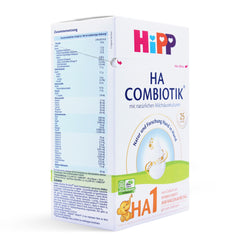
| HiPP HA Stage 1 | Partially (~20%) | Prevention + family allergy history | Whey (100%) | Full ✓ | Yes ✓ | 0–6 mo | $34.95 |
| HiPP HA Stage 2 | Partially (~20%) | pHF follow-on | Whey (100%) | Full ✓ | Yes ✓ | 6+ mo | $34.95 |
| HiPP HA Dutch Stage 1 | Partially (~20%) | Latest formulation, 800g cans | Whey (100%) | Full ✓ | Yes ✓ | 0–6 mo | $56.80 |
| HiPP HA Dutch Stage 2 | Partially (~20%) | Dutch pHF follow-on | Whey (100%) | Full ✓ | Yes ✓ | 6+ mo | $56.80 |
| Extensively Hydrolyzed (eHF) — Diagnosed Mild-Moderate CMPA | |||||||
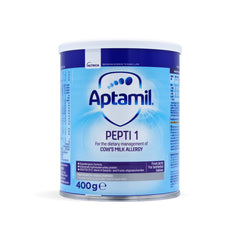
| Aptamil Pepti Stage 1 | Extensively (~86%) ✓ | Diagnosed CMPA, clinically proven | Whey (100%) | Reduced | No | 0–6 mo | $37.80 |
| Aptamil Pepti Stage 2 | Extensively (~86%) ✓ | eHF follow-on | Whey (100%) | Reduced | No | 6+ mo | $37.80 |
| Nutramigen LGG (US) | Extensively ✓ | Diagnosed CMPA + probiotic support | Casein | Lactose-free | LGG ✓ | 0–12 mo | ~$42/can |
| Similac Alimentum (US) | Extensively ✓ | Diagnosed CMPA, widely available US | Casein | Lactose-free | No | 0–12 mo | ~$40/can |
| Amino Acid (AAF) — Severe CMPA / eHF Failure | |||||||
| EleCare (US) | Amino acid (100%) ✓ | Severe CMPA, multiple food allergies | Free amino acids | Lactose-free | No | 0–12 mo | ~$50/can |
| Neocate (US) | Amino acid (100%) ✓ | Severe CMPA, GI disorders | Free amino acids | Lactose-free | No | 0–12 mo | ~$55/can |
| ⚠️ NOT Hypoallergenic — Do NOT Use for CMPA | |||||||
| HiPP Comfort | Partially (mild) | Colic, gas, constipation — NOT CMPA | Whey | Reduced | Yes | 0+ mo | $34.00 |
| Goat milk formulas | None — intact protein ✗ | Mild sensitivity only — NOT CMPA ✗ | Intact goat casein | Full | No | — | $28–54 |

Some babies are born with sensitivity or intolerance to milk protein and have difficulty processing formula milk and sometimes even breast milk. Typically, pediatricians recommend a hypoallergenic formula for babies showing signs of milk protein allergy, including diarrhea, vomiting, wheezing, irritability, and eczema.
Thankfully, the presence of true milk protein allergies in babies is only 2-3%.
Finding the right hypoallergenic infant formula for your baby can be a stressful process. This article is a complete guide to choosing the best hypoallergenic formula for your baby who cannot tolerate regular formula. Keep reading to find more information.
If your baby is allergic to cow's milk protein, the symptoms can start appearing between the first three to six months of life. Hypoallergenic formula is specially designed for babies who have problems digesting cow's milk protein.
The term "hypoallergenic" means that the formula proteins have been hydrolyzed or broken down into smaller ones. This formula causes a less allergic reaction and is well tolerated by infants. Depending on how severe your baby has an allergic reaction determines how small the formula protein should be.
According to the American Academy of Pediatrics (AAP) , the hypoallergenic formula should be:
Below are some hypoallergenic formulas to choose from:
Partially hydrolyzed formulas contain partially broken milk protein. These formulas aren't truly considered hypoallergenic because of several sized proteins. They cannot be used for babies with milk protein allergies.
In these formulas, the protein is extensively broken down into tiny pieces, and therefore, it is easily absorbed and digested by the baby. Such formulas are known as genuinely hypoallergenic and are tolerated well by 90% of infants.
These formulas lack small or large protein molecules because, in these formulas, protein is broken down into their building blocks, called amino acids. These are 100% non-allergic and can be used for infants who are allergic to extensively hydrolyzed formulas.
Soy-based formulas are used as an excellent alternative to cow's milk, but they are not considered hypoallergenic. According to research, about 50% of infants who are allergic to cow's milk will also react to soy formula. So, babies with cow's milk intolerance should not be given soy-based formulas.
These formulas are a safe option when babies are sensitive to cow's milk, but do not really have other allergies.

According to the American Academy of Pediatrics, a hypoallergenic formula should only be used when the baby has apparent medical symptoms. If a baby has family history of food allergies, a hypoallergenic formula should be considered. The probability of food allergy in babies increases by 10% if the mother/father has allergies and further increases by 20% if both parents have allergies.
If the baby allergic to milk protein shows the following symptoms, they may be prescribed a hypoallergenic formula:
Spitting is an entirely normal phenomenon, but it may become a point of concern if a baby has more severe symptoms. A baby with severe reflux shows the following symptoms:
All these signs may indicate a milk protein allergy.
If your baby isn't tolerating cow's milk protein, constipation is a sign. A constipated baby has hard, pellet-like stools.
Gassiness is normal in babies with a sterile GI system. However, if a baby has an allergy or milk intolerance, they may experience excessive gassiness with a foul odor, clenched fists, and bloating.
Infants' food intolerance and allergies may form small ulcers in the GI tract, resulting in bloody stools.
Hypoallergenic formula is required when a baby has watery and foul-smelling diarrhea due to milk protein allergy. Diarrhea may also lead to dehydration and cause severe medical complications.
A forceful projection of stomach fluids is known as vomiting, which may signify a severe allergic reaction to milk protein.
Extreme fussiness and crying for more than 3 hours a day, even if the baby's diaper has been changed, is known as colic. Colic affects about 20% of infants.
If your baby develops an itchy rash or hives after feeding formula, this may indicate an allergic reaction to cow's milk. Your baby can also experience eczema as a result of allergy and intolerance. The baby develops red, itchy bumps on the face, neck, and scalp in eczema.

Before purchasing a hypoallergenic formula for your baby, you should consider the following things:
It requires some research and a careful approach to find the best product for your baby having a hard time digesting regular formula. You should look for a reputable European brand, such as HiPP, Holle, or Lebenswert that have passed a test of time and are in the market for decades.
Baby formulas should always be nutritious and manufactured with wholesome ingredients. A hypoallergenic formula must contain the following vital elements:
European formulas are 100% organic certified and follow the strict EU Commission guidelines.
Many formulas out there come with a terrible and unpleasant taste. Some formulas have good taste achieved from taste-enhancing ingredients. You should choose a formula free of artificial flavors, taste-enhancing agents, and corn syrup.
As a parent, you should never compromise on your baby's health. Do not sacrifice good quality over price. Since the hypoallergenic formula is unique, it comes with higher prices. Also, amino acid-based formulas have even higher price tags.
Your pediatrician may recommend formulas from different brands that may work for your baby. The following are some recommended formulas by Organic Life Start, and are all hypoallergenic formula without corn syrup:
✓ Contains Probiotics & Prebiotics
✓ No sugar, no corn syrup, no soy
✓ Hydrolyzed milk proteins reduce allergic reactions
✓ Popular for constipated babies
Check Price
HiPP HA formula comes in three stages (stage PRE, stage 1, and stage 2). With its special formulation, HiPP HA is recommended for babies with allergic reactions.
✓ Contains Probiotics & Prebiotics
✓ No sugar, no corn syrup, no soy
✓ Reduced lactose with hydrolyzed milk protein
✓ Easy to digest formula for sensitive babies
Check Price
HiPP Comfort Milk formula is suitable for constipated babies and sensitive to some ingredients in baby formulas, such as lactose. The formula has reduced lactose content so that it can be less irritating to the gut.
✓ Clean formula ingredients
✓ No palm oil
✓ Contains DHA, & ALA
✓ Popular for babies alergic to cow's milk
Check Price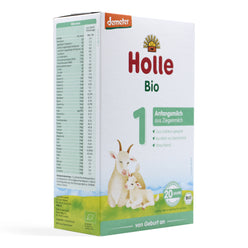
Holle Goat Milk formula is ideal for babies to avoid cow's milk protein allergy. The formula is manufactured with 100% organic goat milk that is easy on the baby's digestive system. The formula also relieves constipation.
✓ Clean formula ingredients
✓ No palm oil
✓ Contains natural whey, DHA, & ALA
✓ Popular for babies alergic to cow's milk
Check Price
Holle Goat Dutch formula is perfect for infants who are sensitive to cow's milk. The formula is demeter certified (organic++), contains organic goat milk that is gentle on the baby's stomach and is easier to digest.
✓ Contains Prebiotics, DHA, and ARA
✓ No sugar, no corn syrup, no soy
✓ Reduced lactose with hydrolyzed milk protein
✓ Popular for the dietary management of colic and constipation
Check Price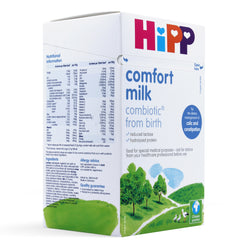
HiPP UK Comfort hypoallergenic formula is a well-loved choice for babies with digestion concerns, offering gentle relief for colic, constipation, and other discomforts. Featuring less lactose and hydrolyzed protein, this formula combines natural prebiotics and fibers to support healthy gut function and encourage softer stools.
✓ Has Prebiotics and Probiotics
✓ Hydrolyzed milk proteins reduce allergic reactions
✓ No sugar, no corn syrup, no soy
✓ Easy to digest formula for sensitive babies
Check Price
HiPP Dutch HA is the latest HiPP Hypoallergenic Formula and is an excellent choice for infants dealing with constipation, allergies, or sensitivity to cow's milk. It contains hydrolyzed milk proteins to minimize allergic reactions and offers complete nutrition with prebiotics and probiotics.
✓ No sugar, no corn syrup, no soy
✓ Reduced lactose
✓ Hydrolyzed milk proteins reduce allergic reactions
✓ Designed to help with colic and constipation
Check Price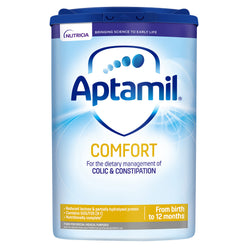
Aptamil Comfort is specially designed to provide relief for babies experiencing discomfort due to gas and colic. Formulated with gentle ingredients, this baby formula helps ease digestive discomfort and reduces the likelihood of excessive gas formation.
✓ Contains a patented blend of prebiotics GOS/FOS
✓ RHas no added lactose
✓ Hydrolyzed milk proteins reduce allergic reactions
✓ Popular for the dietary management of cow’s milk protein allergy (CMPA)
Check Price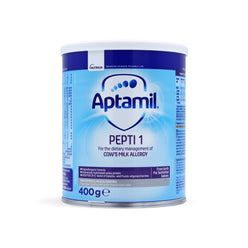
Aptamil Pepti is a specialized hydrolyzed formula designed to cater to the specific needs of infants with cow's milk protein allergy (CMPA) or lactose intolerance.
Some babies are naturally allergic to cow's milk protein; therefore, their digestive system sometimes cannot process breastmilk or formula milk. You can observe symptoms like vomiting, diarrhea, reflux, or constipation due to an allergic reaction. If your baby is allergic to milk protein, you should opt for a hypoallergenic formula. Organic Life Start is dedicated to providing your baby with the best formulas that are easy to digest: HiPP HA, HiPP Comfort, Holle Goat, and Holle Goat Dutch formulas. These formulas can be a perfect solution to deal with your baby allergies.
It depends on severity. For allergy prevention (family history, no symptoms): HiPP HA Stage 1 (partially hydrolyzed, with probiotics, $34.95). For diagnosed mild-moderate CMPA: Aptamil Pepti (extensively hydrolyzed, $37.80) or Nutramigen LGG (~$42). For severe CMPA or multiple allergies: EleCare or Neocate (amino acid, ~$50–55). Always follow your pediatrician's guidance — HA formula is a medical decision.
Partially hydrolyzed (pHF) breaks down ~20% of milk proteins. It reduces allergy risk in at-risk babies but is NOT suitable for treating existing CMPA — enough intact protein remains to trigger reactions. Extensively hydrolyzed (eHF) breaks down ~86%+ of proteins into very small peptides that the immune system doesn't recognize as cow milk. This is the first-line treatment for confirmed CMPA, tolerated by over 90% of allergic infants. HiPP HA is pHF. Aptamil Pepti is eHF.
No. Goat milk proteins cross-react with cow milk proteins in over 90% of CMPA cases. The casein proteins in goat and cow milk are structurally similar enough that the immune system treats them as the same allergen. Goat milk formulas are appropriate for babies with mild cow milk sensitivity (fussiness, gas) but NOT for diagnosed CMPA (eczema, blood in stool, vomiting, wheezing). If your baby has CMPA, only hydrolyzed or amino acid formulas are safe. See goat milk formulas for sensitivity (not allergy).
HiPP HA is partially hydrolyzed — it's designed for allergy prevention in at-risk babies, not for treating existing CMPA. The AAP definition of "hypoallergenic" requires tolerance by 90% of allergic infants, which applies only to extensively hydrolyzed and amino acid formulas. HiPP HA is excellent for babies with a family history of allergies who haven't yet developed symptoms. For babies who already have confirmed CMPA, Aptamil Pepti (eHF) is the appropriate European option.
Hydrolysis breaks protein chains into smaller peptides, which have a bitter taste and distinctive smell — this is normal and indicates the formula is working as intended. The more extensively hydrolyzed, the stronger the taste. Amino acid formulas have the least palatable taste. Tips: introduce HA formula gradually, mix with a small amount of previously tolerated formula for the first few feeds, and serve at body temperature. Most babies accept the taste within 3–5 days if introduced before 3 months of age. Older babies may resist more.
HA formulas cost more than standard formulas due to the hydrolysis process. European pHF: HiPP HA $34.95/600g, HiPP HA Dutch $56.80/800g. European eHF: Aptamil Pepti $37.80/400g. US eHF: Nutramigen ~$42/can, Alimentum ~$40/can. US AAF: EleCare ~$50/can, Neocate ~$55/can. Check with your insurance or WIC — some plans cover prescription HA formulas for diagnosed CMPA.
Yes. HiPP HA PRE and HiPP HA Stage 1 are both suitable from birth. HiPP HA PRE is starch-free and has the thinnest consistency — closest to breast milk flow, ideal for combo feeding or newborns. HA Stage 1 contains a small amount of organic starch. For diagnosed CMPA from birth, Aptamil Pepti Stage 1 (eHF) is appropriate from day one.
Both are partially hydrolyzed, both are for 0–6 months, both contain probiotics. The difference: HA PRE has no starch (thinnest consistency, closest to breast milk, best for supplementing breastfeeding). HA Stage 1 contains organic starch (slightly thicker, helps baby feel fuller between feeds). Choose PRE for combo feeding or spit-up-prone babies. Choose Stage 1 for full formula feeding. Both cost $34.95.
For prevention (pHF like HiPP HA): your pediatrician may trial a switch to regular formula at 6–12 months if no allergy symptoms have developed. Do this under medical supervision — introduce small amounts of regular formula mixed with HA and watch for reactions over 2 weeks. For diagnosed CMPA (eHF): most children outgrow CMPA by age 3–5. Your allergist will conduct supervised oral food challenges to determine when it's safe to reintroduce cow milk protein. Never switch without medical guidance.

By: Isa
Happy mom of 1. Built her career in the medical equipment industry, and later on converted her passion to serving babies. Organic Life Start customer service since 2022.




Celine L -
I never realized that symptoms like reflux, constipation, or frequent tummy troubles could sometimes be related to a milk protein allergy. As a parent, it’s helpful to learn about the different formula options available for sensitive babies. Articles like this make it easier to understand what questions to discuss with a pediatrician.
Antionette S. -
After experimenting with several options that didn’t seem to agree with my little Jerrell, it was a relief to find the correct hypoallergenic recipe for him. After much deliberation, we decided on HiPP Dutch HA, and his stomach has been much soothed by this choice. He appears to be considerably happier and calmer after his meals and stays that way for the most part. Knowing he’s receiving enough to eat without the pain we endured before is a huge relief.
Lesley H -
When we found out that our baby was dealing with eczema, it was both concerning and overwhelming for us as parents. We were advised to consider a hypoallergenic formula to help reduce potential triggers and support her sensitive system. After doing some research, we decided to try HiPP HA as it is specially designed for babies with allergies and sensitivities. Making that switch gave us a sense of hope that we were taking the right step for her comfort and health. Since then, we have felt more reassured knowing we are supporting her needs in the best way we can.