


113 hours of research 9 minute read

In Europe, there are currently two famous formulas that parents prefer: HiPP and Holle. As go-to-providers of European baby formulas, we can help you find fundamental differences between HiPP and Holle so you can decide which infant formula is best for your baby's needs.
HiPP and Holle Formula
HiPP and Holle are among the most trusted and established brands in Europe that have been manufacturing nutrient-rich formulas for a very long time. HiPP was launched in 1899 in Germany by Joseph HiPP. Joseph HiPP was a talented baker with a family of many children suffering from nutritional issues. His wife, Maria Oster, had problems with breastfeeding. So, Joseph HiPP made rusk flour and added it to the milk. His children later grew up to be strong and healthy.
HiPP then started making nutrient-rich baby formulas and later expanded the brand globally. Today, the brand provides healthy baby food sourced exclusively from organic farms.
Holle appeared as Holle Food AG in 1933 in Arlesheim, a small town in Switzerland. Soon afterward, the company produced the first Holle organic baby food and Holle whole-meal bread. Holle became one of the finest baby formula manufacturers in Europe known for its strict organic farming practices.
Both brands have been approved by the European Commission, which has stricter quality standards compared to the American formula. Since every mom's top priority is the best formula for their infant, this article helps review the differences and similarities between HiPP and Holle formulas.
HiPP vs. Holle: Macronutrients
- Carbohydrates

Carbohydrates serve as the main reservoir of energy and help your baby's growth metabolism. For babies, lactose is the most vital form of carbohydrate that plays an integral role in:
- Calcium absorption
- Maintains good gut bacteria
- Encourages physical and mental development [1].
Infants are naturally born with the lactase enzyme that aids in the easy digestion of lactose. Both HiPP and Holle offer at least 30% of their carbohydrate content in lactose form.
Almost all HiPP infant formulas are lactose-based, except for HiPP anti-reflux formula that contains maltodextrin. As maltodextrin sits heavier in the stomach, it prevents reflux and aids digestion in sensitive tummies.
Compared to HiPP organic formulas, Holle organic formulas are a combination of two carbohydrates: maltodextrin and lactose (except for 2 lactose only formulas Holle Goat Pre and Holle Cow Pre). Maltodextrin makes babies feel full for longer.
- Protein

- Healthy development of baby's brain
- Nail and hair growth
- Muscle development
Whey and casein are two very different kinds of protein. Breast milk contains 60% whey and 40% casein proteins, while cow's milk contains 20% whey and 80% casein [2].
For babies with sensitive tummies, it is important to choose a formula that contains more whey or is using hydrolized protein.
All HiPP baby formulas mimic the blended whey ratio of breast milk, except for specialized formulas. HiPP Anti-Reflux contains 100% whey and HiPP Hypoallergenic series is using hydrolized protein.
All Holle formulas have added whey to bring the proteion ratio closer to the breast milk. If your baby is sensitive to Holle cow's milk protein, you should opt for goat milk options. Goat milk protein is smaller and in general is easier to digest.
HiPP vs. Holle: Micronutrients & Supplements
- DHA & ARA

The development process of an infant's immunity, nervous system, and vision requires essential nutrients such as omega-3s (DHA & ALA) and omega-6 fatty acids (ARA) [3].
Unlike European formulas, most US organic baby formulas do not include these supplements.
HiPP baby formulas have long been offering DHA and ARA. In 2020 following the guidelines of the EU commission, HiPP has increased the amount of vitamin D, choline, and DHA. DHA is safely obtained from fish and vegetable oils.
Before 2020, Holle baby formulas did not contain DHA. Now, Holle's all recent formulas contain DHA derived from algae (goat's milk formulas) and fish oil (cow's milk formulas). The new formulation of Holle's products now contains linoleic acid, alpha-linolenic acid, and DHA.
- Prebiotics & Probiotics

Prebiotics and probiotics are essential for strengthening the immune system and maintaining the gut microbiome in the baby's digestive tract. Probiotics not only improve immune response but also prevent eczema and reduce colic [4].
HiPP formulas, including Dutch, Anti-Reflux, Comfort, and HiPP Hypoallergenic. HiPP German formula contains both probiotics and prebiotics.
Holle formulas do not contain prebiotics or probiotics. However, you can complement Holle's formulas with additional supplements yourself.
Most Popular HiPP Formula
✓ 100% Organic Formula
✓ With Added Prebiotics and Probiotics
✓ HiPP's most popular formula
Check Price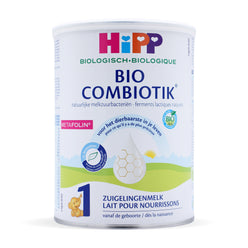
Popular With Parents Because: HiPP Dutch is one of our nutritionally complete and best-selling European formulas with organic certifications. The formula contains a whey-to-casein ratio that mirrors the ratio found in breast milk. To help kick start a healthy gut microbiome, HiPP Dutch has added prebiotics and probiotics, alongside immuno-boosting galacto-oligosaccharides originating from organic lactic acid bacteria cultures. This formula is GMO-free, gluten-free, soy-free, starch-free, corn syrup-free, and sugar-free - all the while nutritionally rich.
Most Popular Holle Formula
✓ 100% Organic Formula
✓ Easy-to-digest Goat Milk Formula
✓ Popular for babies with sensitivity to cow's milk protein
Check Price
Popular With Parents Because: Holle Goat is an organic goat milk formula that is easier to digest than comparable cow's milk formulas because it has lower quantities of complex milk proteins that would be found in a cow's milk formula. Additionally, it is free from artificial preservatives, chemicals, and added sugars, ensuring a pure and natural nutritional option for your baby. Parents also appreciate that Holle Goat Formula is rich in essential vitamins and minerals, supporting healthy growth and development. Its gentle formulation can be helpful in alleviating the root causes of constipation, cramps, and gassiness that are common with infants.
HiPP vs. Holle: Cost Comparison
Here's what you can expect from both HiPP and Holle manufacturers in terms of pricing.
HiPP Formula Cost
Below are the prices of different HiPP formulas per fluid ounce:
- HiPP German: $0.20-$0.25
- HiPP Dutch: $0.20-$0.24
- HiPP Dutch HA: $0.33-$0.34
- HiPP UK: $0.20-$0.22
- HiPP UK Comfort: $0.20-$0.24
- HA and HA Stages PRE: $0.25-$0.31
- AR and Comfort: $0.25-$0.29
Holle Formula Cost
Holle offers formulas based on goat's milk and cow's milk. Below are the prices of different Holle formulas per fluid ounce:
- Stage 1 goat milk formula: $0.30-$0.35
- Holle BIO Stages PRE: $0.26-$0.28
- Holle BIO (cow milk formula): $0.23-$0.26
- Holle Goat Dutch formula: $0.33-$0.34
- Holle Cow A2: $0.24-$0.25
The following tables highlights differences between HiPP and Holle in terms of macronutrients, micronutrients, and other considerations (cost, specialty options):
| Ingredients & Other Considerations | HiPP Formulas | Holle Formulas |
|---|---|---|
| Carbohydrates |
Most HiPP Formulas: Lactose-based Anti-Reflux: Lactose + Maltodextrin |
Most Holle formulas: Lactose + Maltodextrin Cow PRE & Goat PRE: Lactose-based |
| Protein |
Most HiPP Formulas: Protein mix similar to breast milk Hypoallergenic: Protein hydrolysates Anti-Reflux: 100% whey |
All Holle formulas: Casein and whey protein ration mimics breast milk Goat: Smaller proteins compared to cow + extra casein |
| DHA & ARA | All HiPP Formulas | All Holle formulas |
| Prebiotics & Probiotics | All HiPP Formulas: Prebiotics & Probiotics | All Holle formulas: No pre or probiotics |
| Cost |
Cost effective: HiPP German, HiPP Dutch Specialized: Comfort, HA PRE, HA, RA: A bit more expensive |
Goat formulas: Most expensive Cow: Similar price as HiPP |
| Specialty Options |
Hypoallergenic: Protein hydrolysates for easy digestion Anti-Reflux: 100% whey for preventing reflux and easing digestion |
Goat formulas: For infants with sensitivity to cow's milk |
| Organic |
Comfort, Anti-Reflux, Hypoallergenic: Contain organic ingredients but not EU certified organic Most HiPP formulas: EU certified organic |
All Holle formulas: EU certified organic + Demeter biodynamic certified. Meets highest organic requirements. |
Pros & Cons of HiPP and Holle Formulas
Now that we have highlighted most of the details about both formulas let's delve into the pros and cons of HiPP and Holle.
| HiPP Pros | HiPP Cons |
|---|---|
|
|
| Holle Pros | Holle Cons |
|
|
HiPP vs. Holle
Both HiPP and Holle maintain all nutritional characteristics following the strict guidelines of the EU commission. Both formula brands are organic-certified and share many similarities, but they also have some key differences that make them stand apart.
Choose Holle if:
- You prefer a high quality, simple & pure organic formulas.
- You prefer exceptional biodynamic organic practices.
- You want to choose goat milk formula.
Choose HiPP if:
- You prefer baby formula that contains both prebiotics and probiotics.
- You prefer a cheaper, but organic and nutritionally complete formulation.
- You're looking for specialty formulas to treat digestion issues, anti-reflux or allergies.
You can also go through the pros and cons list mentioned above to make an informed yet healthy decision for your baby.


Amanda -
As parents, we wanted to keep both HiPP and Holle as alternatives because we didn’t want to rely on just one formula brand. We liked HiPP for its variety of formulations and options, while Holle appealed to us because of its simple ingredient approach and organic-focused options. Having both brands as alternatives gave us peace of mind in case our baby’s preferences or feeding needs changed. We learned that the specific formula and stage matter more than simply choosing a brand, so we always checked the ingredients before switching. In the end, keeping HiPP and Holle as alternatives gave us flexibility while helping us choose what worked best for our baby at each stage.
Vaughn -
I spent some time comparing HiPP and Holle because I wanted to find what really suited little Dinah, and honestly, she’s happy with both. She loves her HiPP Dutch and Holle Goat bottles, so I feel lucky that we have two options she enjoys. It’s nice knowing I can switch between them without making feeding time a struggle. Seeing her happily finish her bottle is all the reassurance I need. For us, both formulas have become favorites in their own way.
Damon -
How do you tell when a little tummy trouble is just part of adjusting to a new formula versus something that means you should stop and talk to your pediatrician? I feel like this is something a lot of parents worry about when making a formula change.