Total: $0.00
Baby can't wait?
(exclusive offer)

34 hours of research 3 minute read

Choosing a baby formula can be challenging. With so many options available in the market, parents spend much time researching which formula to test with their children. We’d love to help you as much as we can and we prepared this blog post to discuss one of the controversial topics in the world of baby formula: Whole Milk vs Skim Milk. We’ll cover the following topics:
Milk is a baby’s source of essential nutrients. All of these items below are present in both breast milk and baby formula:
1. Energy
a. Carbohydrates - source of energy
b. Fat – source of energy
c. Protein - build, repair, and maintain tissues: brain, eyes, heart, lungs, skin, muscles, and other organs.
2. Calcium - Bone and tooth development; blood clotting; healthy nerves and muscle development
3. Folate - Cell division; Healthy cell growth development; Genetic material formation within every body cell
4. Iron - Blood cell growth and development, Iron deficiency anemia prevention
5. Zinc - Protein formation and wound healing; Blood formation; Growth and maintenance of tissues; Taste development; Healthy Immune System
6. Vitamins
a. Vitamin A - Healthy skin; Healthy eyes; Growth and development; Healthy immune and reproductive systems
b. Vitamin B1 - Energy release from carbohydrates during metabolism; Nervous system function
c. Vitamin B2 - Energy release from carbohydrates during metabolism; Skin and digestive system development; Blood and brain function
d. Vitamin B3 - Energy release from carbohydrates during metabolism; Digestive system function
e. Vitamin B6 - Body development and formation; Nervous system and brain development; Protein use; fat metabolism
f. Vitamin B12 – Brain development
g. Vitamin C - Collagen formation; Capillaries, bones, and teeth maintenance; Wound healing; Infection resistance; Iron absorption
h. Vitamin D - Proper development of bones and teeth by helping the body absorb calcium; Use of calcium and phosphorus in the body
i. Vitamin E - Vitamin A and essential fatty acids protection; Tissue breakdown prevention
j. Vitamin K – Blood clotting
7. Minerals
a. Fluoride – Tooth decay prevention
b. Water - Regulation of body temperature; Fluid medium for nutrients and waste products; Cell metabolism; Healthy kidney function
While breastmilk is the gold standard in infant feeding, it is not always available to parents for various reasons. Baby formula is designed as an alternative to breastfeeding. Two of the most popular types are whole milk baby formula and skim milk baby formula.
The main difference between whole milk baby formula and skim milk baby formula is its fat content. Whole milk contains 3.25% fat.
Skim milk baby formula, on the other hand, contains less than 0.5% natural fat. Since fat is an important source of energy, skim milk baby formula is supplemented with a blend of vegetable oils to meet the fat requirements for a baby’s nutrition.
Milk can contain the following fat sources:
| Whole Milk | Skim Milk (a blend of the following) |
|---|---|
| Natural Whole Milk Fat (primary) | Palm Oil |
| Sunflower Oil (top-up) | Rapeseed Oil |
| Coconut Oil (top-up) | Sunflower Oil |
| Rapeseed Oil (top-up) | Beta-Palmitate |
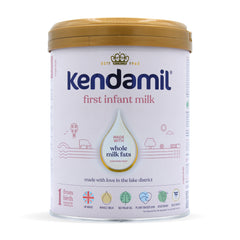
Whole milk baby formula contains natural and healthy whole fat. It does not include palm oil.
While it includes other vegetable oils like sunflower, coconut, and rapeseed – these are only considered top-ups to the fat in whole milk. These vegetable oils are important and healthy vegetable fats for your baby’s development.
Only whole milk baby formula contains milk fat globule membranes (MFGM) which modulate the Neonatal Gut Microbiome, and normalize Intestinal Development, cognitive and immune function, metabolism, motility improvement, and skin health.
Whole milk baby formula can also be creamier and tastier than skim milk baby formula.
Whole milk baby formula gets a bad rep because some say that this milk type is linked to early childhood obesity and heart disease. However, this was disputed by a study conducted across seven countries. Canadian researchers reviewed 28 studies of about 21,000 children to see if babies who were given whole milk baby formula were more susceptible to obesity than babies who were given skim milk.
Interestingly, the studies showed that babies who drank whole milk were 40% less likely to be obese or overweight. The result is contrary to the myth that skim baby formula will help babies avoid childhood obesity.
If you have a history of weight management problems and heart disease, you might want to consider whole milk formulas for your baby. Whole milk baby formula can reduce body fat because the body takes longer to digest whole milk. This means that the natural high-fat whole milk makes babies feel full longer – so they will not feed as much. On the other hand, the body digests vegetable oils, the fat in skim milk baby formula, quickly so baby formulas that are skim milk-based do not give this “full” feeling so babies tend to drink more bottles.
Babies with sensitive stomachs can benefit from skim milk baby formula. Since whole milk baby formulas are creamier compared to skim milk baby formulas- some babies, especially newborns, struggle to digest whole-milk baby formula. Skim milk baby formula without thickeners has a more watery consistency, which makes it easier for some babies to feed on.
If you have a family history of bone density, you can try skim milk with your baby. Skim milk also contains higher calcium than whole milk. The fats in skim milk are a healthy blend of vegetable oil which helps babies absorb nutrients.
A skimming machine removes the cream layer which is mostly composed of natural fat from whole milk. This is normally done through centrifugal force or heating – an extra step in milk production. But note that fat in the form of an organic vegetable oil blend is added to complete the fat requirement in baby formula.
Skim milk baby formula normally contains palm oil to provide palmitic acid. Palm oil is associated with the prevention of fats and calcium absorption which later on leads to reduced bone mass and density. Palmitic acid binds with calcium which can also lead to harder stools and constipation.
A glass of milk or a cup of milk – up to 2 a day will benefit toddlers up to 2 years of age. Once they are more than 2 years old, they can start drinking 2.5 cups or glasses daily.
Babies, especially newborns, are unable to digest full cream milk so babies under 1 year old are advised to have either whole milk or skim milk. Once a baby’s growth is steady, parents can start giving their children fat free milk.
We have seen questions like is almond milk good for you – and yes it is since it is a good source of Vitamin E. But note that while it can be given to toddlers, it is not meant to fully replace to breast or baby formula.
Both whole milk baby formula and skim milk baby formula are great options. It depends on your baby’s needs and digestive requirements- but there is no guarantee that any formula will be the right match from the get-go.
We recommend consulting with your pediatrician for guidance specific to your baby’s needs.
Organic Life Start is committed to providing accurate, reliable, and trustworthy information to parents and caregivers. We carefully choose credible sources and follow a meticulous fact-checking process to uphold the highest standards in infant nutrition and parenting advice. To learn more about our dedication to accuracy, please explore our editorial guidelines.
Link To Sources

By: Isa
Happy mom of 1. Built her career in the medical equipment industry, and later on converted her passion to serving babies. Organic Life Start customer service since 2022.




Amanda Fabian -
Could you go into more detail about how whole milk and skim milk formulas are processed differently for babies? I just want to be sure I understand what goes into each option before choosing what’s best for my little one. It can feel a bit confusing when thinking about digestion and fat content at different ages. I’d really appreciate a simple explanation to help make feeding decisions a little easier.
Jamil Mehta -
I am currently on my newborn, and we’ve done breastfeeding with my three babies, but now I see why switching to formula might be better in some situations. I’m reading that whole milk and skim milk baby formulas can both support a baby’s growth, but they do it in slightly different ways. I used to think breastmilk was always the only “best” option, but now I understand that modern formulas are also designed to meet important nutritional needs. It’s interesting how whole milk formulas are said to be closer to natural fats, while skim milk formulas focus more on adjusting fat blends. I’m starting to realize it’s less about one being perfect and more about what works for each baby’s digestion and comfort. As a dad, I’d be interested to hear from other parents—especially those who used HiPP Dutch—how was your experience, and did your baby adjust easily and seem comfortable on it?
Chester -
We spent a lot of time thinking about whether to give our twins skimmed milk or the whole milk variant, because we wanted to be sure we were making the right choice. In the end, we chose skimmed milk because we were more comfortable managing their fat intake as part of their overall diet. Since they were already getting nutrients from other foods, we felt it balanced things out better for them. We also noticed that skimmed milk seemed a bit lighter on their tummies, which mattered to us. As parents, we were always watching how they reacted to what they consumed, and comfort played a big role in our decision. We understood that whole milk has its own benefits, especially for growing children, so this wasn’t a decision we took lightly. We made sure to consider their age and nutritional needs before making the switch. It really came down to what seemed to work best for our twins individually. We stayed open to adjusting if needed, depending on how they continued to grow and respond. In the end, we chose what gave us the most confidence and what we felt supported their overall well-being.